Get Instant Quote
Leave Your Message

China Best Key Chain Carabiner Wholesale Supplier?

Finding the China Best Key Chain Carabiner Wholesale Supplier requires more than comparing catalog prices. A reliable supplier should show consistent machining, clear material details, and practical quality controls. Look closely at the gate spring, hinge movement, surface finish, and engraved logo. A smooth gate should close without sticking. Sharp edges should not remain around the body.

Michael Zhang, a China-based hardware sourcing consultant with more than 15 years of factory experience, says, “A low price matters only when the carabiner remains reliable after repeated handling.” His observation reflects a common purchasing lesson. Samples can look excellent, while large batches may reveal uneven plating or loose springs. That risk deserves attention.

This guide examines suppliers producing a Key Chain Carabiner for promotional goods, outdoor accessories, retail packaging, and everyday carry products. It considers aluminum, zinc alloy, stainless steel, custom colors, packaging, and order quantities. It also reviews communication speed, sample approval, inspection records, and production transparency. These details often separate a dependable partner from a merely attractive listing.

Some assumptions may be wrong. A larger factory is not always the safest choice. A cheaper quote may exclude tooling, packaging, or inspection costs. Buyers should request current certificates and confirm whether each claim applies to the exact product. Product use also matters. A decorative keychain accessory should not be presented as climbing or load-bearing equipment unless independently tested and clearly rated. Careful verification creates a more realistic path toward quality, stable supply, and long-term cooperation.
China Best Key Chain Carabiner Wholesale Supplier?

What Is a Key Chain Carabiner and How Is It Used?

A key chain carabiner is a small clip with a spring-loaded gate. It connects keys, access cards, or small tools to a bag loop, belt ring, or lanyard. Its compact shape keeps loose items together and makes them easier to find. Many models use aluminum alloy, zinc alloy, or stainless steel. Each material changes the weight, finish, and resistance to daily wear.

It is simple to use. Press the gate, attach the ring, and release it. Check that the gate closes fully. A wholesale buyer should examine spring strength, surface smoothness, ring quality, and load markings before ordering. These details affect real customer experience. A carabiner made for key storage is not automatically suitable for climbing, lifting, or safety protection. That mistake is easy to make. It can create serious risk.

In daily use, users can clip keys to a backpack during commuting or attach a small flashlight for travel. Dust may weaken the gate over time, so occasional cleaning helps. Sharp edges are unacceptable. Some lightweight designs feel convenient but may bend under rough handling. This is where testing matters. Sample batches should be checked for repeated opening, closing, coating wear, and ring deformation. No design is perfect. A reliable China wholesale supplier should provide clear specifications, consistent production, and honest inspection records.

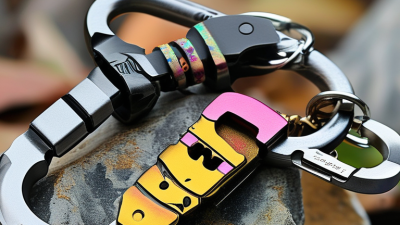
Why Source Key Chain Carabiners from China?

Why Source Key Chain Carabiners from China?

China remains a practical sourcing option for key chain carabiners because its manufacturing network is broad and responsive. Buyers can compare zinc alloy, aluminum, and stainless steel options within one sourcing market. Many factories support custom shapes, laser engraving, color plating, and retail-ready packaging. Small details matter, especially when a carabiner must fit a 25-millimeter strap or a compact key ring.

Experienced buyers usually request samples before placing bulk orders. A reliable supplier should provide material details, finish specifications, dimensional drawings, and inspection records. For everyday key accessories, spring-gate movement, surface consistency, and ring attachment deserve close checking. These products are not automatically climbing equipment. Clear product labeling prevents unsafe assumptions and supports responsible sales.

China can also offer flexible production quantities and coordinated shipping through established export channels. However, lower pricing should not replace quality control. A rushed sample may hide weak plating or uneven gate tension. That happened in one procurement review. The mistake was trusting photographs too early. Factory audits, pre-shipment inspections, and written tolerance requirements reduce these risks. Buyers should also confirm packaging strength, carton markings, and communication schedules before production begins. Good sourcing is not effortless. It depends on verification, realistic specifications, and steady supplier communication.

Why Source Key Chain Carabiners from China?

China's 2023 World Bank Logistics Performance Index results show strong infrastructure, logistics competence, and delivery timeliness. These capabilities support efficient sourcing, production coordination, quality inspection, and international shipment of metal accessories such as key chain carabiners. The data measures China's logistics environment rather than any individual supplier or brand.

Source: World Bank, Logistics Performance Index 2023. Scores range from 1.0 to 5.0.

How to Evaluate a Wholesale Supplier’s Product Quality

China Best Key Chain Carabiner Wholesale Supplier?

A reliable supplier proves quality with measurable evidence, not polished photographs. Ask for material specifications, dimensional drawings, coating details, and recent inspection records. For aluminum carabiners, verify alloy, gate alignment, spring recovery, and surface consistency. For steel models, check hardness, weld quality, corrosion resistance, and coating thickness. These small parts may touch keys daily, so rough edges and weak springs quickly become visible.

The ISO Survey 2023 recorded 1,265,216 ISO 9001 certificates worldwide. This figure shows the value of quality systems, but certification alone does not guarantee good carabiners. Request batch-level test reports instead. Useful checks include gate-cycle testing, pull-force testing, salt-spray testing, and visual inspection under controlled lighting. A third-party laboratory should identify samples, methods, dates, and acceptance limits. Be careful with impressive numbers. A high breaking force may not reflect everyday durability.

Tips: Order samples from different production batches. Compare dimensions with digital calipers. Test the gate repeatedly, then inspect the hinge and spring. Rub printed surfaces with cloth and alcohol. Ask for a corrective-action report when defects appear. Suppliers that answer vaguely deserve slower approval. No checklist is perfect. I would also keep retained samples for future comparison, because memory becomes unreliable after several deliveries. Supplier quality improves when every requirement is written, measured, and traceable.

China Best Key Chain Carabiner Wholesale Supplier? - How to Evaluate a Wholesale Supplier’s Product Quality

Evaluation Dimension What to Check Practical Quality Benchmark Suggested Weight Verification Method
Base Material Confirm whether the body is made from aluminum alloy, stainless steel, or another declared metal. Material specification is stated clearly and remains consistent between the quotation, sample, and bulk order. 15% Review the material declaration, purchase specification, and an independent material test when required.
Load Performance Separate decorative key-chain use from load-bearing or safety-critical applications. The supplier provides measured test results and clearly states that a promotional carabiner is not personal protective equipment unless specifically certified. 20% Request sample testing, a test report, and the exact test method, direction, and failure criteria.
Gate and Spring Function Inspect opening, closing, alignment, spring return, and resistance to accidental opening. The gate closes fully, returns smoothly, does not stick, and shows no visible gap or abnormal looseness after repeated operation. 15% Operate multiple samples repeatedly and record failures, incomplete closure, and spring deformation.
Surface Finish Check scratches, burrs, sharp edges, coating uniformity, color consistency, and polishing quality. No sharp burrs or exposed corrosion points; visible surfaces are smooth and reasonably consistent across the inspected batch. 10% Use a documented visual inspection under consistent lighting and define acceptable defect limits before production.
Corrosion Resistance Evaluate how the finish responds to moisture, sweat, storage, and transport conditions. The supplier provides a relevant corrosion or coating test when the product will be used in humid or outdoor environments. 10% Request a test report using a recognized method and compare the result with the intended use conditions.
Dimensional Accuracy Measure overall length, width, wire diameter, gate opening, ring size, and product weight. Dimensions and weight remain within the agreed tolerance stated on the technical drawing or approved sample. 10% Use calibrated calipers and scales to inspect pre-production and random bulk samples.
Attachment and Assembly Inspect split rings, connectors, rivets, welds, and any attached accessories. Components are firmly assembled, aligned correctly, and free from loose parts, incomplete welds, or weak connector points. 8% Perform visual inspection and moderate pull or twist checks appropriate to the product’s intended use.
Packaging Protection Assess protection against scratches, moisture, dust, deformation, and mixing during shipping. Individual and carton packaging prevents avoidable surface damage and includes clear quantity and handling information. 5% Review a packed sample and conduct a reasonable transport simulation or pre-shipment inspection.
Quality Control System Check incoming-material inspection, process controls, final inspection, traceability, and corrective-action records. Quality procedures are documented, responsibilities are defined, and nonconforming products are recorded and controlled. 7% Review inspection records, sampling plans, calibration records, and corrective-action examples.
Total Suggested Evaluation Weight 100% Select suppliers based on verified evidence rather than price alone.

Note: A key-chain carabiner intended for promotional or accessory use should not be treated as climbing or fall-protection equipment unless it has the required design, testing, and certification for that application.

What Certifications and Customization Options Should You Check?

When sourcing a key chain carabiner from China, certifications deserve careful checking. Ask for a current ISO 9001 certificate and verify its issuing body. This supports consistent production, but it does not prove every batch is perfect. Request material declarations for aluminum, stainless steel, or zinc alloy. For products touching skin, review nickel-release and restricted-substance test reports. RoHS and REACH-related documentation may also matter for your target market. Check the report number, testing date, product description, and laboratory details. Paperwork alone is not enough.

Ask whether the supplier performs gate-opening, spring-cycle, coating-adhesion, and corrosion tests. A reliable factory should explain sample sizes and acceptance limits. Load ratings require special caution. A decorative key chain carabiner is not climbing equipment. The supplier should print clear warnings and avoid unsupported strength claims. I have seen attractive samples fail after repeated gate cycles. Small details matter.

Customization can include dimensions, metal grade, surface finish, engraving, laser marking, color, packaging, and barcode labels. Share a technical drawing with tolerances, not only a phone image. Confirm the logo position, font size, plating thickness, and color reference. Request a pre-production sample and approve a sealed reference sample. It reduces disagreement later. Still, color may shift slightly between batches. That needs discussion. Confirm minimum order quantity, mold charges, sampling time, inspection rules, and replacement terms in writing. A factory audit or video inspection adds useful evidence, although neither replaces independent testing.

How to Compare Prices, Minimum Orders, and Delivery Terms?

When comparing key chain carabiner wholesale suppliers, do not judge price alone. Request a tiered quotation for 500, 1,000, and 5,000 pieces. Check the alloy, plating thickness, spring strength, engraving method, and individual packaging. A low unit price may exclude tooling, inspection, cartons, or export documents. Ask for a complete landed-cost estimate. Include product, packaging, freight, duties, and payment fees.

Minimum order quantity affects cash flow. Some suppliers accept a small trial order but charge higher tooling costs. Others offer lower prices only after large production runs. Compare the price break against your realistic sales volume. The World Bank’s 2023 Logistics Performance Index evaluates logistics across 139 economies, including customs, infrastructure, and shipment timeliness. Use those factors when reviewing a supplier’s location and shipping history. Delivery terms also need careful reading. Under FOB, you usually manage the main freight after loading. Under DDP, the seller handles more transport steps, but the quotation may hide important assumptions. UNCTAD’s Review of Maritime Transport 2024 notes that maritime shipping carries over 80% of global merchandise trade by volume, so port delays can affect even small orders.

Tips: Ask for a dated production schedule, inspection photos, carton dimensions, and two freight options. Confirm whether “30 days” means production time or total delivery time. I have found this wording surprisingly unclear. Keep a written record of every revision, because small changes can alter both cost and delivery. Also, do not describe a decorative key-chain carabiner as climbing equipment without suitable testing and documentation.