China Top 10 Bullet Bottle Opener Suppliers is a practical starting point for buyers comparing custom promotional products, gifts, and retail accessories. The market rewards more than a striking silhouette. A useful opener should feel balanced in the hand, turn smoothly, and keep its finish after repeated use. Small details matter: the edge of the metal, the grip, and the alignment of the opening mechanism.
PPAI’s 2024 Sales Volume Estimate reported that the U.S. promotional products industry generated approximately $26.1 billion in sales in 2023. That figure describes the broader promotional-products market, not Bullet Bottle Openers specifically. It still signals why supplier choice matters: buyers need clear specifications, consistent production, and dependable quality checks. Ask for material details, samples, finish options, and inspection procedures before comparing quotes. A polished sample is useful. It is not proof of every production run.
There is no verifiable Bullet Bottle Openers specialist or topic-specific quotation in the supplied material, so attributing one would be misleading. For a broader design perspective, industrial designer Dieter Rams said, “Good design is as little design as possible.” Rams was not a bottle-opener industry expert, but the principle is relevant: decoration should not compromise comfortable use. A little skepticism helps. This guide compares ten China-based suppliers by product range, customization, communication, and evidence of quality control, while recognizing that supplier capabilities can change. Check current samples and documentation before placing an order.
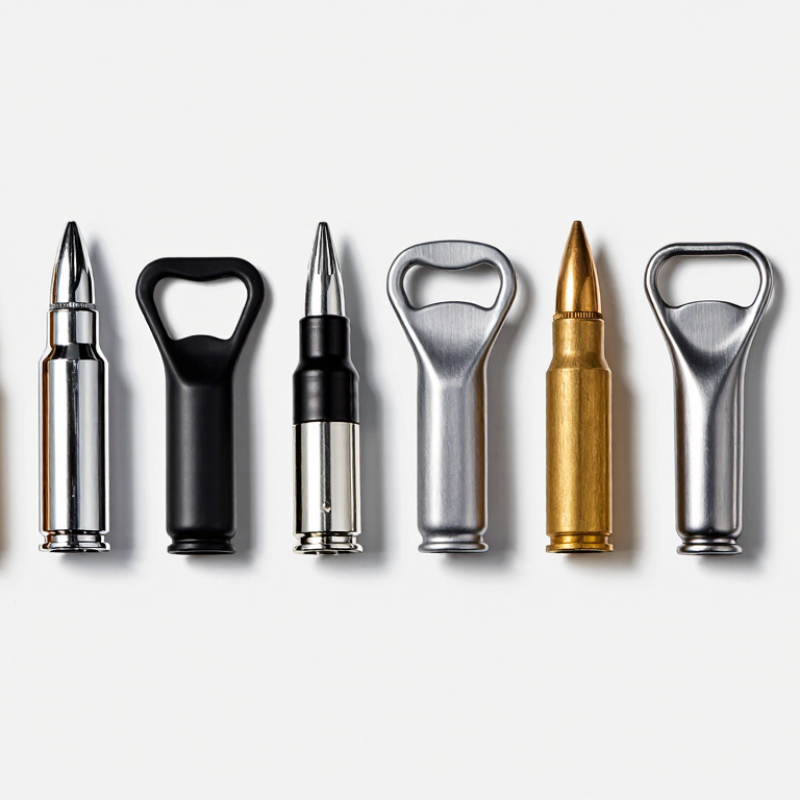
A bullet bottle opener is a small manual tool with a rounded, cartridge-inspired shape. Its shape is decorative; the working end is a metal lip or slot that catches a bottle cap’s rim. Unlike a corkscrew, it does not enter the drink or bottle. Simple, but useful. To use one, hold the bottle neck firmly with one hand. Rest the opener’s lip beneath the cap edge, then tilt the handle upward with controlled pressure. The cap should lift with a small pop. Keep fingers clear of the metal edge, and avoid forcing the handle if it slips.
Many designs use stainless steel or zinc alloy, though materials and finishes vary. Check that the tool feels solid, the slot fits common crown caps, and the surface has no rough burrs. A smooth finish matters when the opener is handled often or given as a gift. Some models include a key ring or magnet; these additions affect portability, not opening technique. Wipe the opener dry after washing to help prevent water marks. The novelty shape can make it easy to spot in a drawer, but appearance alone does not prove quality. That is worth remembering.
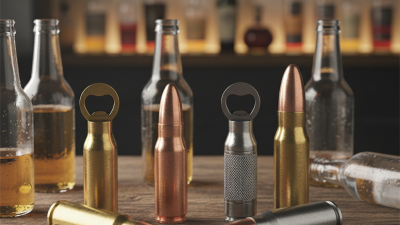
A bullet bottle opener is a handheld lever-style tool, often designed in the shape of a bullet. To open a pry-off bottle cap, position the opener’s hook beneath the cap edge and lift the handle to prise the cap off. The chart shows typical dimensions of a 26 mm pry-off crown cap; actual caps can vary by design.
China’s bullet bottle opener supplier market sits between metalworking, giftware, and promotional products. Many factories offer stainless steel or zinc-alloy bodies, polished finishes, and custom packaging. Buyers should check the opener’s edge, cap-lifting leverage, surface coating, and repeated-use performance. A neat sample is not enough. Ask for batch inspection records and confirm whether plating is tested for wear.
Market figures need careful reading. The Promotional Products Association International estimated U.S. distributor sales at US$26.1 billion in 2023. That figure covers many product types, not bottle openers, but it signals a sizeable promotional-goods channel. China’s National Bureau of Statistics reported manufacturing value added grew 5.0% in 2023; this describes broad industrial activity, not opener production. Public data rarely isolates this niche. That gap matters. Supplier comparisons therefore rely heavily on factory audits, sample tests, lead-time checks, and clear order specifications. A low unit price can hide inconsistent dimensions or packaging delays. Buyers should also verify material descriptions against test documents, rather than treating catalogue wording as proof.
When comparing China-based bullet bottle opener suppliers, verify the factory behind the quotation, not just the trading address. Ask for registration details, production-site photos, and a live video walk-through of polishing and assembly. Then request a sample. Check the edge finish, cap-grip shape, coating consistency, and whether the opener bends during repeated hand testing. Record defects on an inspection sheet; attractive product photos prove little.
The World Bank’s 2023 Logistics Performance Index compares 139 economies across six areas, including customs, tracking, and timeliness. Use these dimensions to question delivery promises: ask which port, shipping mode, carton count, and buffer days the quotation assumes. UNCTAD’s Review of Maritime Transport 2024 reports that maritime shipping carries over 80% of world trade by volume. That is not a supplier score, but it shows why freight delays can outweigh a small unit-price saving.
Compare at least three quotations using the same alloy, finish, printing method, packaging, and order quantity. Request material declarations and batch inspection records, then independently check a sample before approving production. A tidy spreadsheet can still mislead. Supplier audits have limits; one visit cannot guarantee every later batch will match. Keep a retained sample and define acceptable limits for scratches, dimensions, and opening performance.
The ten profiles below describe common supplier capabilities in China, not audited claims about named companies. One supplier may specialize in zinc-alloy casting, producing a compact opener with a smooth, weighty feel. A second may focus on stainless steel, where buyers should inspect edge finishing and corrosion resistance. A third may combine metal bodies with wooden handles, matching grain and color across samples. Small details matter.
A fourth profile centers on laser engraving, useful for logos or short custom text. A fifth may accept smaller trial orders, though unit costs can rise. A sixth may offer retail packaging, such as fitted cartons or foam inserts. Ask for photos of packed goods, not only polished product shots. They show more.
A seventh supplier may document checks for dimensions, surface finish, and opener performance. An eighth may support custom molds, but tooling costs and lead times need written confirmation. A ninth may help refine product drawings, including cap-grip shape and hanging-hole placement. A tenth may carry several opener styles and coordinate mixed orders. Compare samples from the same production stage when possible. One weakness remains: attractive samples do not guarantee consistent bulk production. Request clear inspection criteria and a pre-shipment sample before placing a larger order.
The profiles below describe common supplier categories and manufacturing capabilities in China; they are not verified rankings or claims about specific companies. Materials, processes, customization, and order requirements vary by factory and should be confirmed directly.
| No. | Supplier Profile | Typical Product Focus | Common Materials | Relevant Processes | Customization Options | Best Suited For |
|---|---|---|---|---|---|---|
| 1 | Metal promotional-gift manufacturer | Bullet-shaped bottle openers for events, gifts, and promotional campaigns | Zinc alloy, stainless steel, aluminum | Die casting, polishing, plating, laser marking | Logo, color, surface finish, gift packaging | Branded promotional orders |
| 2 | Die-casting specialist | Three-dimensional metal opener bodies with shaped details | Commonly zinc alloy; other alloys depend on the design | Tooling, die casting, deburring, polishing, plating | Custom mold, relief details, finish, color | Custom-shaped designs and repeat production |
| 3 | Stainless-steel hardware producer | Durable openers with a metal opener edge and bullet-style handle | Stainless steel, sometimes combined with other metals | Cutting, stamping, machining, grinding, polishing | Engraving, dimensions, brushed or polished finish | Function-focused products |
| 4 | Precision-machining workshop | Small-batch or detailed metal opener components | Stainless steel, aluminum, brass, or zinc alloy as specified | CNC machining, drilling, turning, deburring | Shape, tolerances, surface treatment, engraved marks | Prototypes and specialized designs |
| 5 | Metal stamping manufacturer | Flat or low-profile opener components and attached decorative parts | Stainless-steel sheet and other formable metals | Stamping, punching, forming, edge finishing | Outline, thickness, cutouts, printed or engraved decoration | Simple designs and production runs |
| 6 | Multi-process giftware factory | Bullet-style openers combined with key rings, stands, or gift sets | Metal, with optional plastic or fabric packaging components | Die casting, assembly, printing, packaging | Accessory combinations, logo, colors, retail packaging | Gift sets and retail-ready orders |
| 7 | Surface-finishing-focused supplier | Metal opener products where appearance and finish are key requirements | Usually zinc alloy or stainless steel, depending on the base product | Polishing, electroplating, painting, coating | Finish, color, gloss level, decorative marking | Appearance-led gift products |
| 8 | OEM and private-label producer | Customer-specified bullet opener designs manufactured to supplied requirements | Material selected according to the design and use requirements | May coordinate tooling, casting or machining, finishing, and assembly | Product design, logo, packaging, inspection requirements | Buyers with drawings or product specifications |
| 9 | Small-batch customization workshop | Personalized or limited-run bullet-shaped openers | Metal options depend on the chosen production method | Engraving, laser marking, machining, manual finishing | Names, short-run graphics, selected finishes | Samples, events, and limited quantities |
| 10 | Export-oriented gift-product supplier | Finished opener products prepared for wholesale or overseas distribution | Commonly metal; packaging materials vary by order | Supplier coordination, product assembly, labeling, packing | Carton packing, labels, inserts, artwork, product finish | Importers and wholesale buyers |
Comparing suppliers takes more than lining up unit prices. Ask what each quote includes: opener material, surface finish, packaging, tooling, and shipping terms. A low price may exclude a custom mold or individual boxes. Check the minimum order quantity and production lead time, too. These details can change the real cost.
Capabilities matter when a design needs a specific length, color, or engraved logo. Request a sample and inspect its weight, edges, grip, and finish under ordinary use. Ask whether the supplier can share a dimensioned drawing and confirm which details are customizable. Clear answers are useful. Vague promises are not. A sample may look polished, while a larger production run varies, so ask how quality checks are handled.
Compare quotes using the same specifications, not rough descriptions. Get pricing at several order volumes and clarify charges for setup, revisions, and packaging. Response speed can help, but it does not prove consistent production. A spreadsheet can still miss small differences in finish or packing. I would leave room for that uncertainty. Before choosing, confirm the final sample, written specifications, and delivery schedule in one record.