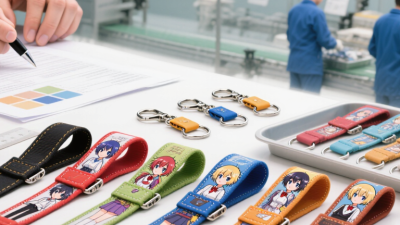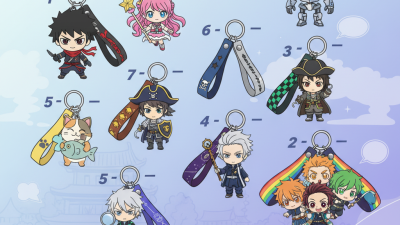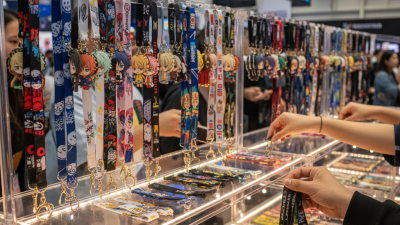
An Anime Keychain Strap may be small, but its quality depends on many practical details: material, printing, stitching, hardware, and finishing. A vivid character design can still disappoint if the colors look dull or the clasp feels weak. Small details matter. Choosing a supplier is not only about finding the lowest quote; it means checking whether the supplier can produce consistent items and communicate clearly throughout the order.
A useful evaluation starts with a physical sample. Inspect the strap’s edges, color accuracy, attachment point, and clasp movement under normal handling. Ask how the supplier checks production quality, what materials are available, and whether design proofs are provided before manufacturing. Clear answers are more useful than broad promises. Request written details on minimum order quantities, sample fees, production schedules, packaging, and shipping estimates so expectations are easier to compare. If a supplier cannot explain a specification, pause and clarify it.
No single supplier is best for every project. A small shop may value flexible quantities, while a larger campaign may need repeatable quality and dependable capacity. Price matters, but so do response times and how issues are handled. This process can feel slower than choosing from a catalog, and it may not remove every risk. That is worth admitting. The sections ahead explain how to compare suppliers with practical checks, ask better questions, and select an Anime Keychain Strap partner suited to your design, budget, and production needs.
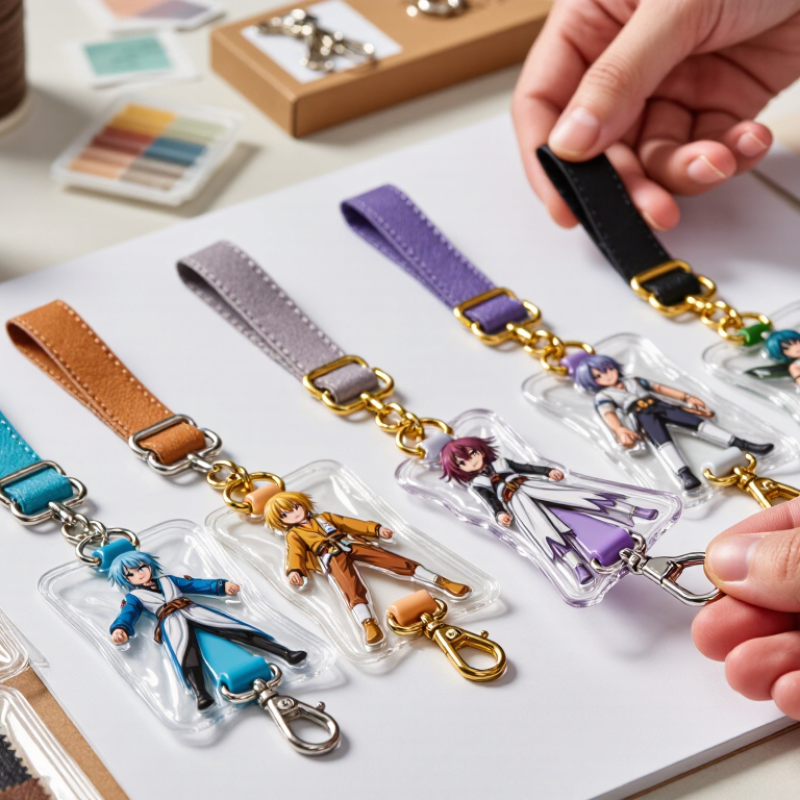
Before requesting quotes, define the strap as a product, not just a character image. The Japan Animation Association’s Anime Industry Report 2024 estimates the 2023 anime market at ¥3.3465 trillion, up 14.3% year over year. That scale points to varied buyers, not one universal specification. Decide who will carry it: a convention visitor may want a lightweight 10–12 cm strap, while a gift buyer may prefer a heavier charm. Record finished length, charm dimensions, material, attachment type, printing method, and target price. Details matter.
Turn preferences into acceptance criteria. Specify color matching, double-sided artwork, edge finish, metal tone, and clasp operation. Licensing International’s 2024 Global Licensing Industry Study reports $356.5 billion in licensed goods and services sales for 2023. In a crowded licensed market, consistent presentation matters. Ask suppliers for a physical pre-production sample, material details, tolerances, defect allowance, minimum order quantity, lead time, and packaging dimensions. Request inspection records or stress-test photos, not broad “premium quality” claims. There is a trade-off: soft straps feel comfortable but can twist; rigid fittings look neat but add weight. I would not approve dimensions from a screen mockup alone. Even careful specs can miss a small mismatch.
A supplier’s experience shows in the details, not just years in business. Ask how they handle artwork with fine lines, tiny text, or several colors. Request photos of completed anime keychains, including close-ups of the printing, strap attachment, and edge finish. A sharp image can hide flaws, so ask for a physical sample when practical. Feel the strap material and check whether the charm’s edges are smooth.
Production capability matters when you need consistent quality across a larger order. Ask what equipment and inspection steps the supplier uses, and how they manage color matching between batches. A reliable supplier should explain its sample approval process, production timeline, and options if items arrive with defects. Ask how many pieces they can produce without rushing quality checks. Capacity claims can sound impressive; details matter more.
Tips: Request a written specification covering dimensions, materials, print method, packaging, and acceptable color variation. Keep one approved sample for comparison. Small test orders help, though they may not reveal every issue that appears in full production. No supplier is perfect. Notice how clearly they answer questions, and be cautious if important details stay vague.
Use this comparison framework to assess suppliers consistently. Production methods, minimum order quantities, lead times, and compliance requirements vary by product and destination market; confirm the details for each order in writing.
| Evaluation Dimension | What to Assess | Strong Supplier Indicators | Evidence to Request |
|---|---|---|---|
| Relevant Product Experience | Experience producing character-themed straps, charms, or similar small accessories using the materials and finishes required. | Can explain the production process, common design limitations, and how artwork is adapted for the selected construction. | Recent, representative product samples or portfolio images, with confidential customer information removed where necessary. |
| Production Process | Available methods, such as woven or printed fabric straps, acrylic charms, PVC parts, or metal components. | Matches the process to the requested design and clearly identifies how each component is manufactured and assembled. | Written process description, material specifications, and samples showing comparable construction and finish. |
| Artwork and Color Control | How the supplier handles file preparation, color references, fine details, gradients, and design revisions. | Reviews artwork before production, flags details that may not reproduce reliably, and provides a proof for approval. | Artwork requirements, digital proof, color-matching method, and approval record for the final production file. |
| Sampling and Approval | Whether a physical pre-production sample is available and how sample changes are documented. | Provides a sample for review when needed and obtains approval for relevant details before starting the full order. | Sample plan, sample charges, revision terms, and a written checklist covering dimensions, color, hardware, and finish. |
| Materials and Hardware | Strap material, charm substrate, inks or coatings, attachment rings, clasps, and other components. | Can identify the materials and hardware used and explain available options, durability considerations, and limitations. | Material or component specifications, close-up sample photos, and declarations or test reports relevant to the product and market. |
| Quality Control | Inspection of incoming materials, in-process assembly, finished goods, and packed orders. | Uses defined inspection steps and acceptance criteria, and has a process for recording and resolving defects. | Quality-control checklist, inspection records or sample report, and the agreed procedure for handling nonconforming goods. |
| Capacity and Scheduling | Available production capacity, order size, production stages, and the supplier's ability to meet the required shipping date. | Provides a realistic schedule with clear milestones and confirms capacity before accepting the order. | Written timeline covering proof approval, sampling if applicable, production, inspection, packing, and dispatch. |
| Minimum Order and Cost Structure | Minimum order quantity, setup or tooling charges, sample costs, unit pricing, packaging, and shipping terms. | Explains how quantities and specifications affect price and lists one-time and recurring charges separately. | Itemized quotation stating quantity, specifications, included packaging, payment terms, and any additional fees. |
| Compliance and Market Requirements | Applicable product-safety, chemical, labeling, or documentation requirements for the intended sales market. | Discusses requirements relevant to the specific materials and destination rather than offering a blanket compliance claim. | Applicable test reports, certificates, or material declarations, with scope, date, and product details available for review. |
| Communication and Issue Resolution | Response clarity, named points of contact, change approval, and procedures for delays or production issues. | Provides specific answers, records decisions in writing, and promptly communicates changes that could affect quality or delivery. | Written order specifications, approval history, production updates, and documented remedies for agreed quality issues. |
Choosing an anime keychain strap supplier starts with comparing materials in person, not just viewing polished photos. Acrylic offers crisp artwork and a smooth surface, but thin pieces may chip at the corners. PVC feels flexible and resists knocks, though fine printed details can look softer. Fabric straps are light and comfortable to hold, while metal fittings add weight and a more solid feel. Feel the edge. Check whether the clasp rotates smoothly and whether the printed colors stay clear under ordinary indoor light.
Tips: Request samples made with your intended artwork and hardware. Ask about thickness, strap width, attachment strength, and packaging. A close-up photo helps, but it cannot show how a clasp feels after repeated use.
Customization should cover more than character artwork. Confirm the available shapes, colors, printing methods, backing options, and minimum order quantity before approving a design. Ask for a digital proof, then inspect small text and narrow outlines at actual size. Quality standards matter too: request the supplier’s inspection checklist and learn how defects are counted or replaced. Consistent color matching and secure attachments are practical benchmarks, not vague promises. I would still check a finished sample carefully; even a reliable process can miss a tiny alignment issue. Small details matter.
When comparing anime keychain strap suppliers, ask for separate prices for the sample, tooling, packaging, and bulk production. A low unit quote can hide setup fees or costly individual bags. Request breaks at several quantities, such as 100, 500, and 1,000 pieces, and confirm whether the price includes printed cards and metal clips. Small orders cost more. A supplier’s minimum order quantity should fit your launch plan, not just its production line. Ask whether mixed designs count toward the minimum; the answer can change the real cost per design.
Delivery estimates need dates and stages: sample approval, production, inspection, and transit. The CSCMP 2024 State of Logistics Report puts U.S. logistics costs at $2.3 trillion, or 8.7% of GDP, for 2023. That broad figure is not keychain-specific, but it shows why freight and handling belong in a landed-cost comparison. The World Bank’s 2023 Logistics Performance Index assessed 139 economies, reflecting how logistics conditions vary by route. Request the shipping method, a dispatch window, and a realistic arrival range. Delays happen. One weak point in many comparisons is treating a quoted lead time as guaranteed; build in buffer time and confirm how holidays or sample revisions affect the schedule.
Choosing an anime keychain strap supplier starts with a sample that matches your production brief, not just a polished display piece. Request a pre-production sample using the intended strap material, clasp, printing method, and packaging. Check whether the clasp closes securely, edges feel smooth, and colors stay clear under ordinary indoor light. Compare the sample with your artwork and written specifications, then record every difference. Small flaws matter. One approved sample is not proof that every batch will match.
Communication is another useful test of supplier reliability. Send a short list of specific questions about revisions, production timing, defect handling, and packing. Notice whether replies address each point clearly and arrive when promised. McKinsey’s 2020 survey of supply-chain executives found that 93% planned to make their supply chains more resilient. That finding supports checking backup plans, not merely choosing the fastest quote. Ask how the supplier handles delayed materials or inconsistent parts, and request dated progress photos during production. Keep decisions in writing. A supplier may sound confident yet provide vague answers; that is a reason to pause and verify, not an automatic rejection. I would also review my own brief: unclear artwork or size tolerances can create avoidable disputes.
This illustrative 1–5 scoring framework highlights sample verification, communication, and reliability as practical supplier-selection criteria. The scores are examples, not measured supplier data; replace them with results from your own evaluation.