China’s Key Strap Lanyard manufacturing sector deserves closer attention from global buyers. These products appear simple, yet their quality depends on webbing strength, stitching accuracy, hardware finish, and print durability. A lanyard that twists beside a metal key ring can quickly expose weak production control.
Grand View Research estimates that the global promotional products market reached approximately USD 25 billion in 2023, with continued growth expected through 2030. PPAI’s consumer research also shows that useful promotional products often remain visible and memorable for longer than disposable advertising materials. These figures do not measure Key Strap Lanyard sales directly. That limitation matters. Many industry articles treat the category as a small accessory market, although purchasing data is rarely separated from broader promotional merchandise statistics.
Promotional-products specialist Mark Graham has stated, “The most effective promotional products are useful, visible, and connected to everyday habits.” His observation fits key strap lanyards closely. They travel through offices, schools, events, and retail spaces every day. Buyers should still question vague claims about “premium quality.” Ask for material specifications, tensile-test records, sample approval, colorfastness results, and evidence of consistent logo placement. A factory’s polished catalog proves little.
This guide examines China’s top ten Key Strap Lanyard manufacturers through practical criteria: production experience, customization capability, quality systems, communication, minimum order quantities, and export reliability. The ranking is not absolute. A supplier suited to 500 branded pieces may fail at 100,000 units. That uncomfortable detail is worth remembering. Supplier selection requires samples, documentation, and direct verification—not attractive photographs alone.

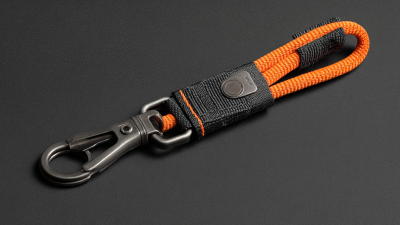
A key strap lanyard is a short, flexible carrier for keys, access cards, small tools, or identification items. It usually combines woven polyester, nylon, cotton, or recycled fibers with a loop and metal or plastic connector. Its main role is simple: keep essential items close, visible, and easier to retrieve.
In manufacturing, the strap’s appearance matters, but function matters more. A reliable lanyard should have even stitching, smooth edges, secure attachment points, and hardware that resists ordinary pulling. Length also affects comfort. A strap that hangs too low may swing against surfaces or become inconvenient during movement. A strap that is too short feels restrictive. Small details create real differences.
Quality checks should include seam inspection, connector movement, color consistency, and basic tensile testing. Material selection should match the working environment, especially where moisture, friction, or frequent handling is expected. A soft surface may improve comfort, while a firm weave can support longer service. Still, no strap is a magic safeguard. It can wear quietly under repeated stress. That point is easy to overlook. Manufacturers in China often serve varied custom requirements, so clear specifications are essential. Buyers should confirm dimensions, attachment methods, test records, and sample performance before approving larger production. A polished sample can hide weaknesses. Careful inspection remains necessary.
Choosing among China’s top key strap lanyard manufacturers requires more than comparing online photos. A practical review begins with material samples, not promises. Check polyester weave, edge stitching, hook strength, and color consistency under daylight. Ask whether production follows a written inspection plan. The best suppliers can explain it clearly.
Experience appears in small details. Can the factory repeat a logo accurately across 1,000 pieces? Can it control tension during sewing? Request a pre-production sample, measured in millimeters, and compare it with the approved file. Confirm minimum order quantities, tooling charges, packaging methods, and realistic lead times. A low quotation may hide weak hardware or rushed inspection. That happens.
Professional manufacturers should provide material specifications, test records, and traceable batch information. Review factory photographs carefully, then arrange an independent audit when the order is important.
Check worker safety, storage conditions, and carton labeling. Reliable communication matters too. A supplier should report delays before they become shipping problems.
Do not judge quality from one perfect sample. Inspect several pieces from different cartons. Look for loose threads, sharp metal edges, uneven printing, and coating odors. Some factories answer quickly but document poorly. Others communicate slowly yet control production well. Evaluation is rarely tidy. Record evidence, not impressions, and leave room for improvement in your supplier scorecard.
China’s top 10 key strap lanyard manufacturers serve promotional, workplace, event, and retail needs. Their product ranges often include polyester straps, woven labels, plastic clips, metal hooks, and detachable buckles. Experienced buyers should examine stitching, edge finishing, and attachment strength rather than relying on photographs alone. A clean sample can reveal loose threads, uneven printing, or weak hardware within minutes.
Manufacturers with dependable production systems usually provide material specifications, pre-production samples, inspection records, and clear packaging details. Ask about polyester density, color consistency, logo placement, and tolerance standards. Factory experience matters, but communication matters too. A technically strong supplier may still cause delays if approvals are poorly documented. One practical concern is customization. Small orders can limit color choices or increase unit costs, and this is easy to underestimate.
Tips: Request a physical sample before confirming bulk production. Test the clip with repeated opening and closing. Check whether the strap twists under light pressure. Confirm lead time, carton dimensions, and replacement terms in writing. If possible, use an independent inspection before shipment. Online reviews help, but they are not proof of current performance. I would also compare two or three samples, because one attractive piece may hide inconsistent workmanship. Supplier selection is not perfectly predictable, and even careful buyers can miss a production detail.
Industry reference: typical custom production lead time by order quantity
Custom key strap lanyard production commonly requires approximately 7–15 working days after artwork approval, with larger orders benefiting from more efficient production scheduling. Actual lead times may vary according to material, printing method, hardware, packaging, and order complexity.
China Top 10 Key Strap Lanyard Manufacturers
Product Range, Customization, and Production Capabilities
China’s leading key strap lanyard manufacturers serve promotional, retail, event, and workplace applications. Their product ranges commonly include polyester, nylon, cotton, reflective, elastic, and recycled-fiber straps. Textile Exchange’s Materials Market Report 2024 states that polyester represented 57% of global fiber production in 2023. This explains its continued use in durable, cost-sensitive lanyards. Still, material choice should match the user’s environment, not only the target price.
Customization usually covers width, weave, color, logo method, buckle type, and attachment hardware. Experienced factories can produce jacquard patterns, heat-transfer graphics, woven labels, and silicone accessories. They should also provide color samples, abrasion checks, and pull-strength records. Small details matter. Poorly matched clips can weaken a premium design. A buyer should request pre-production samples before approving bulk output.
Production capability separates reliable suppliers from simple trading offices. Useful indicators include in-house weaving, automatic cutting, sewing lines, metal inspection, and final packing control. The Global Trade Research Initiative has repeatedly highlighted China’s strength in integrated manufacturing and export supply chains, but capacity alone does not guarantee consistency. Large monthly output may hide uneven stitching or delayed sampling. That is where my own evaluation becomes less certain: factory claims often need independent verification. Third-party inspections, batch photos, and documented quality standards provide stronger evidence than polished catalogs.
Choosing the right Chinese lanyard manufacturer requires more than comparing catalog prices. Check the factory’s production experience, material knowledge, and quality control records. Ask whether it makes polyester, nylon, recycled, or custom woven straps in-house. A reliable supplier should explain webbing density, colorfastness, stitching strength, and attachment options clearly.
Request physical samples before approving a large order. Inspect the edges, printing, clips, breakaway points, and stitching under daily-use conditions. Pull the strap repeatedly. Test the clasp with gloves. Small details matter. Ask for recent inspection reports, material certificates, and batch traceability documents. These records show whether quality control is consistent, not merely promised. A video factory tour can help, but it cannot replace independent testing or an on-site audit.
Confirm minimum order quantities, sample fees, lead times, packaging, and replacement policies in writing. Communication speed also matters when artwork changes or measurements are unclear. During one sample review, a neat logo hid uneven thread tension, which became obvious after repeated pulling. That mistake was preventable. I now compare several samples from different production batches, rather than judging one perfect piece. Manufacturers serving international buyers should understand product documentation and responsible production expectations. Do not select the lowest quotation automatically; unclear materials, rushed inspection, and weak after-sales support may create higher costs later.
| No. | Selection Dimension | Recommended Benchmark | Why It Matters | What Buyers Should Verify |
|---|---|---|---|---|
| 1 | Product Structure | Confirm whether the supplier produces wrist straps, badge lanyards, key straps, phone straps, retractable styles, or safety-breakaway designs. | Different applications require different webbing widths, hardware, attachment methods, and safety features. | Request technical drawings, finished-product photographs, material specifications, and samples matching the intended use. |
| 2 | Material Options | Common choices include polyester, nylon, cotton, recycled polyester, zinc alloy, aluminum, plastic, and stainless-steel components. | Material selection affects softness, abrasion resistance, color performance, weight, comfort, and total cost. | Check fiber composition, metal or plastic grade, coating details, recycled content claims, and material test reports. |
| 3 | Webbing Size | Typical strap widths range from approximately 10 mm to 25 mm, while thickness commonly varies according to the fabric construction and application. | Width and thickness influence appearance, comfort, printing area, tensile performance, and hardware compatibility. | Confirm finished width tolerance, thickness tolerance, edge construction, weave density, and compatibility with buckles or clips. |
| 4 | Customization Capability | Evaluate options for woven designs, screen printing, heat transfer, dye sublimation, embossing, metal logos, packaging, and custom hardware. | Reliable customization helps maintain consistent brand presentation and reduces assembly or packaging work after delivery. | Approve a pre-production sample and verify artwork format, color references, print position, repeat accuracy, and logo durability. |
| 5 | Strength and Durability | Ask for tensile, pull, seam, clip, and repeated-use testing based on the product’s intended load and usage conditions. | A key strap or lanyard can fail at the webbing, stitching, connector, split ring, buckle, or attachment point. | Review test methods, sample quantity, failure location, test load, safety factor, and whether reports apply to the final configuration. |
| 6 | Safety Features | For around-the-neck products, consider breakaway buckles, rounded edges, secure connectors, and designs that minimize snagging risks. | Safety requirements depend on the wearer, environment, age group, and whether the product is used near machinery or moving equipment. | Confirm breakaway performance, component retention, edge inspection, risk assessment, and any destination-market safety requirements. |
| 7 | Compliance Documentation | Depending on the market and product composition, relevant documentation may include restricted-substance testing, chemical safety records, social-audit records, and quality-management certificates. | Documentation helps demonstrate that materials and production controls meet the buyer’s legal, retailer, or internal procurement requirements. | Check certificate scope, issuing laboratory or body, validity period, product identification, test standards, and whether reports are traceable. |
| 8 | Minimum Order Quantity | MOQ often differs by material, color, printing method, hardware, packaging, and whether a new mold or tooling is required. | A low unit price may not be economical if the order requires excessive quantities or multiple custom components. | Request separate MOQs for stock items, custom colors, custom hardware, packaging, and repeat orders; also confirm mixed-color policies. |
| 9 | Sampling and Production Control | A practical process includes an inquiry review, prototype sample, pre-production approval, in-process inspection, final inspection, and retained samples. | Clear quality gates reduce color variation, incorrect attachments, dimensional errors, printing defects, and packaging mistakes. | Ask for an inspection checklist, approved sample procedure, defect classification, corrective-action process, and production photographs or records. |
| 10 | Lead Time and Export Support | Confirm separate timelines for sampling, material preparation, bulk production, inspection, packaging, and transportation. | Delivery performance depends on component availability, customization complexity, holiday schedules, inspection timing, and shipping method. | Obtain a written production schedule, shipping terms, carton details, export documents, payment milestones, and a plan for delays or defective goods. |