7 Best Triangle Carabiners for Global Buyers?
Choosing the right Triangle Carabiner is more complicated than comparing prices and polished product photos. Global buyers must examine shape, alloy, gate design, working load, finish, and traceable manufacturing details. A carabiner that feels sturdy in a warehouse may perform differently after salt exposure, repeated opening, or temperature changes.
This guide reviews seven strong options for different purchasing needs, including outdoor equipment, industrial accessories, luggage hardware, and general utility use. Each selection is considered through practical checks: gate alignment, spring response, machining quality, surface protection, markings, packaging, and supplier documentation. For safety-related applications, buyers should confirm applicable regional standards and seek independent certification. Marketing language alone is not proof.
Real-world use reveals small weaknesses. A narrow gate opening can frustrate gloved users. A smooth finish may still hide poor threading or uneven edges. Some lightweight models look impressive but offer limited resistance to twisting. We also recognize that “best” depends on the job, budget, climate, and required load rating. No single product fits every market.
The recommendations combine manufacturer specifications, observed construction details, buyer-focused comparison points, and cautious interpretation. Ratings should always be checked against the intended application, not guessed from appearance. Read the fine print. Inspect every unit before use. This approach helps importers, retailers, and individual buyers choose more confidently while avoiding unsupported performance claims and unnecessary risk.
What Is a Triangle Carabiner and How Is It Used?
A triangle carabiner is a metal connector with three sides and a gated opening. Its shape creates separate contact points for webbing, ropes, or harness loops. Compared with a round connector, it can reduce twisting when straps meet from different directions. However, shape alone does not prove strength or safety.
Triangle carabiners are used in harness systems, adjustable straps, bags, and light rigging applications. Certified models may connect a harness to a suspension point or help organize multiple webbing sections. Check the gate movement, frame condition, load rating, and marking before use. Never treat an unmarked accessory as protective equipment. For climbing, rescue, or work-at-height tasks, select equipment tested under applicable regional standards. A mistake I often see is judging quality by weight alone. Heavy does not always mean reliable.
Tips: Match the connector with the intended load and material. Keep the gate facing away from surfaces that could open it. Inspect for cracks, sharp edges, corrosion, and deformation. Remove damaged equipment immediately. Follow the manufacturer’s instructions, because similar-looking triangle carabiners may have very different limits. When buying internationally, confirm certification documents, dimensions, locking design, and local compliance requirements. A simple product photo is not enough.
Triangle Carabiner Performance Reference
The chart shows the principal minimum strength thresholds commonly referenced by EN 12275 for certified climbing connectors: major-axis loading with the gate closed, minor-axis loading, and major-axis loading with the gate open. Buyers should verify the certification label, gate-locking mechanism, material, dimensions, and intended application because actual triangle carabiner ratings vary by model.
Key Standards and Safety Features for Global Buyers
Triangle carabiners can suit anchors, rigging layouts, and equipment organization, but their shape does not prove safety. Global buyers should identify the intended use before comparing products. A connector for climbing may follow EN 12275 or UIAA 121. Industrial personal protective equipment may require EN 362 and additional regional requirements. These standards are not interchangeable.
Check the stamped strength ratings on the spine. The major-axis rating should be clear, along with open-gate and minor-axis values. A secure locking gate helps prevent accidental opening, yet it cannot correct cross-loading or poor positioning. Look for smooth gate movement, consistent spring return, clean machining, and no sharp edges. A screw-lock model needs visible thread engagement. An automatic-locking model still requires a function check.
Reliable suppliers should provide material details, batch identification, inspection guidance, and test documentation. For EU sales, buyers may also need a valid Declaration of Conformity and appropriate CE marking. Other markets can request different evidence. Ask whether the certificate covers the exact model, gate type, and production batch. Similar-looking documents can be misleading. I have seen buyers focus on the highest kilonewton number and overlook gate performance. That is an easy mistake. Inspect every connector for cracks, corrosion, deformation, and worn gates before use, then remove doubtful equipment from service immediately.
How to Compare Materials, Strength, Size, and Gate Design
When comparing triangle carabiners, start with the material, not the finish. Aluminum keeps packs light and resists surface corrosion, but steel usually handles abrasion and repeated loading better. Titanium can offer a useful balance, yet its price may not suit every buyer. Check the alloy, heat treatment, and manufacturing traceability. A polished surface alone proves very little.
Strength markings need careful reading. Look for major-axis, minor-axis, and gate-open ratings, usually shown in kilonewtons. These values are not interchangeable. A strong frame can still perform poorly when the gate is open or the connector is loaded sideways. For load-bearing work, select products clearly certified for their intended use. Follow the supplied instructions and local requirements. I would not trust a vague product page.
Size affects handling in real conditions. Measure the gate opening against the webbing, rope, or hardware you use. A narrow opening may reduce accidental cross-loading, while a wider opening accepts bulky components more easily. The gate should close cleanly, without rubbing or hesitation. Screw-lock gates need visible thread engagement; automatic gates need reliable return action. Dirt changes both. An overlooked detail. Inspect the nose, hinge, and locking sleeve after drops or heavy use. My own preference can be too simple: lighter is convenient, but durable control often matters more than a few saved grams.
7 Best Triangle Carabiners for Global Buyers? - How to Compare Materials, Strength, Size, and Gate Design
| Rank |
Triangle Carabiner Profile |
Main Material |
Major-Axis Strength |
Minor-Axis Strength |
Gate-Open Strength |
Length × Width |
Gate Opening |
Weight |
Gate Design |
Best-Fit Application |
| 1 |
Lightweight Aluminum Delta |
7075-T6 aluminum alloy |
24 kN |
8 kN |
8 kN |
100 × 68 mm |
22 mm |
58 g |
Screw-lock, straight gate |
Anchoring, rigging, and general climbing where low weight matters |
| 2 |
Compact Aluminum Delta |
7000-series aluminum alloy |
22 kN |
7 kN |
7 kN |
82 × 56 mm |
18 mm |
38 g |
Screw-lock, compact nose |
Travel, lightweight rescue kits, and compact connection points |
| 3 |
Auto-Lock Aluminum Delta |
7075-T6 aluminum alloy |
27 kN |
9 kN |
8 kN |
108 × 72 mm |
25 mm |
78 g |
Triple-action auto-lock, keylock nose |
Work positioning and situations requiring reduced gate-opening risk |
| 4 |
Heavy-Duty Steel Delta |
Zinc-plated alloy steel |
50 kN |
16 kN |
16 kN |
112 × 78 mm |
24 mm |
150 g |
Screw-lock, wide-gate design |
Industrial rigging and permanent or semi-permanent anchor connections |
| 5 |
Stainless-Steel Marine Delta |
316 stainless steel |
30 kN |
10 kN |
9 kN |
96 × 66 mm |
20 mm |
118 g |
Screw-lock, corrosion-resistant gate |
Marine, coastal, wet, and high-corrosion environments |
| 6 |
Large-Opening Aluminum Delta |
Forged aluminum alloy |
25 kN |
8 kN |
8 kN |
105 × 76 mm |
27 mm |
72 g |
Screw-lock, large clearance |
Connecting multiple ropes, slings, and webbing with bulky hardware |
| 7 |
Double-Lock Aluminum Delta |
7075-T6 aluminum alloy |
28 kN |
9 kN |
8 kN |
102 × 70 mm |
23 mm |
66 g |
Two-stage auto-lock, keylock nose |
Frequent-use systems where fast operation and gate security are important |
Comparison note: Strength values are representative specifications for comparable triangle or delta carabiner configurations. For life-safety applications, verify the permanent product marking, inspection status, loading direction, and certification to applicable standards such as EN 12275, EN 362, or UIAA 121 before purchase or use.
Seven Triangle Carabiner Types for Different Applications
Triangle carabiners suit different tasks because their angled frame keeps webbing centered and reduces sideways movement. Global buyers should compare gate design, material, load rating, and certification before choosing one.
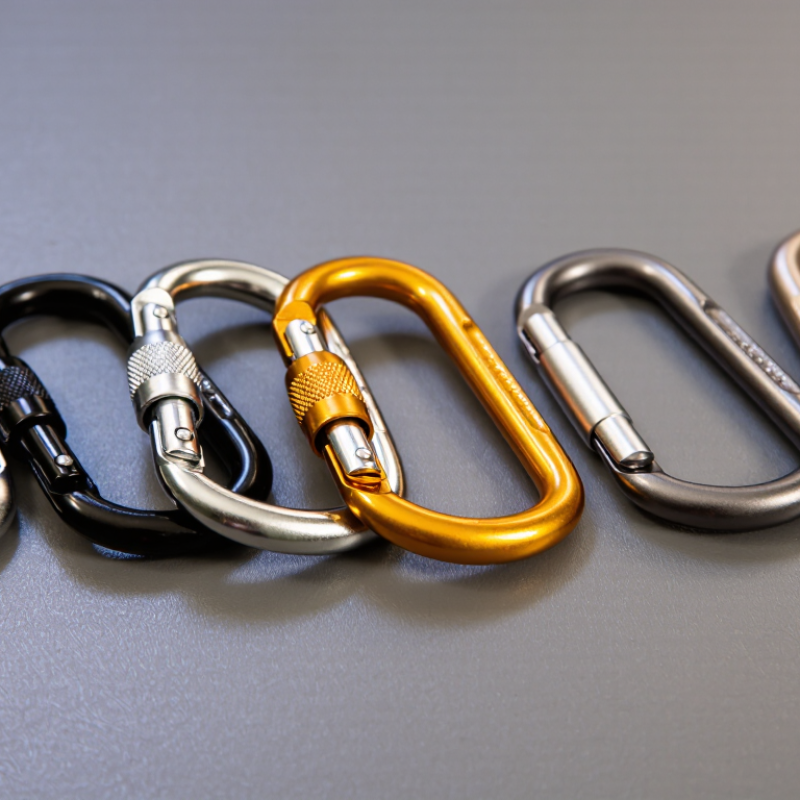
A screw-lock triangle carabiner works well for controlled rigging and anchor connections. An auto-lock version supports frequent use where users need faster closure. A twist-lock model offers another quick-access option, though its mechanism needs regular inspection. Captive-eye types help prevent straps or ropes from shifting during repeated movement. Wide-gate triangles suit bulky webbing and rescue equipment. Lightweight alloy versions are practical for carrying accessories or organizing gear, but they are not automatically suitable for life-safety work. Steel triangles provide stronger abrasion resistance for industrial handling and fixed installations.
Tips: Check the gate after every drop, impact, or rough contact. Keep grit away from the locking sleeve. Match the connector with the intended rope or webbing size. Never rely on appearance alone; read the marked rating and test standard. A bright finish can look reassuring. It proves very little. I once preferred lighter hardware for portability, but repeated edge contact changed that decision. For professional use, select only equipment with traceable documentation, clear instructions, and inspection guidance suitable for the destination market.
How to Select, Inspect, and Purchase the Right Model Internationally
7 Best Triangle Carabiners for Global Buyers?
International purchasing starts with standards, not attractive photographs. The UIAA Safety Commission’s UIAA 121 requirements and EN 12275:2013 specify key connector tests, including 20 kN major-axis strength, 7 kN minor-axis strength, and 7 kN gate-open strength for relevant carabiner types. Confirm the exact category. Triangle geometry can change loading behavior.
Compare seven practical features: major-axis rating, gate-opening rating, locking system, corrosion resistance, material, weight, and traceability. For climbing equipment, request a current test certificate, batch number, technical drawing, and supplier quality records. The certificate should match the delivered model. Small mismatches matter.
Inspect every unit before purchase. Check for sharp edges, gate rebound, uneven springs, cracks, deep scratches, and incomplete locking. Operate the gate with gloves. Then load the connector along its intended axis, never across the nose. The UIAA guidance emphasizes correct loading and avoiding open-gate conditions. A high rating cannot rescue poor placement.
International buyers should also verify packaging, language labels, customs documentation, and the destination market’s conformity rules. Salt-air storage needs extra attention; stainless steel may resist corrosion better, but it is not maintenance-free. I would reject vague “industrial grade” claims without test evidence. That judgment can feel overly cautious. It is still cheaper than replacing an entire shipment.