Get Instant Quote
Leave Your Message

Who Are the Top Microfiber Towel Manufacturers in China?

Finding the top Microfiber Towel manufacturers in China takes more than comparing prices or browsing polished product photos. Buyers need to understand how a supplier handles fabric selection, production consistency, and quality checks. A towel may look plush online, yet feel thin or shed lint after several washes. Details matter.

This guide explains practical ways to assess manufacturers, from microfiber blends and fabric weight to stitching, edge finishing, and absorbency. It also considers customization options, sample availability, production capacity, and communication during an order. These details can reveal whether a supplier is prepared for a small trial run or larger, repeat purchases. Ask for samples, inspect the seams, and test the towel on surfaces relevant to your use. A quick wipe can show softness; repeated washing may reveal more. Samples tell stories.

There is no single ranking that suits every buyer. A hotel distributor may value reliable bulk supply, while a promotional-products company may prioritize custom colors and logo placement. The right choice depends on those requirements, along with clear specifications and realistic delivery expectations. This overview highlights manufacturers worth evaluating and questions to ask before placing an order. It cannot replace independent checks, and a promising first impression is not proof of consistent performance. That caveat matters. Comparing evidence, not just claims, helps buyers make a more confident decision.
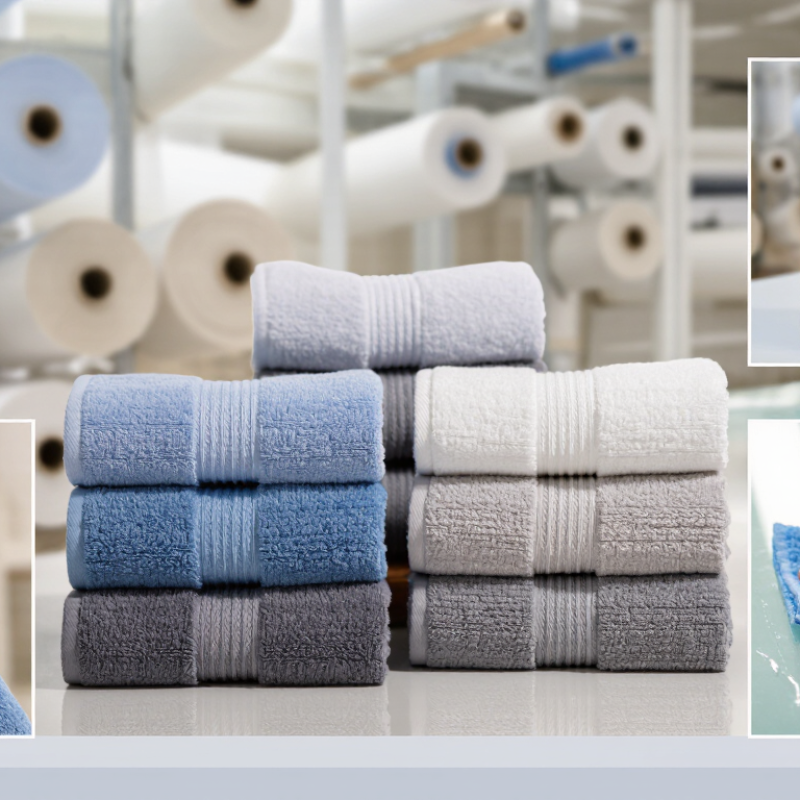
Who Are the Top Microfiber Towel Manufacturers in China?

What Microfiber Towels Are and How They Are Made

Microfiber towels are made from extremely fine synthetic fibers, usually polyester blended with polyamide. The exact blend varies by product and affects softness, absorbency, and drying time. Filaments are spun from melted polymer, then split into finer strands when the design calls for a split-fiber structure. Those strands create tiny spaces that can hold water and lift dust from a surface. They are fine. That matters.

In a typical manufacturing line, fibers are knitted or woven into fabric, dyed, and finished to suit the intended use. The fabric may be washed to remove processing residues before workers cut it into towel panels. Edges are then stitched, bound, or ultrasonically finished, depending on the construction. A close look at the hem can reveal uneven stitching or loose threads. Small details count.

Manufacturers in China may produce towels for cleaning, automotive care, or personal use, with different weights and textures for each task. Quality checks can include dimensions, color consistency, lint release, and absorbency testing. Buyers should compare those results, not softness alone; a plush towel can still shed lint or dry slowly. I would also verify fiber composition and care instructions, since labels and finishing choices are not always equally clear.

Why China Is a Major Microfiber Towel Manufacturing Hub

China’s role as a microfiber towel manufacturing hub rests on a dense textile supply chain. Yarn makers, fabric mills, dye houses, sewing workshops, and packaging suppliers often operate within the same regional networks. That proximity can reduce sample delays and make adjustments to towel weight, pile, blend, and dimensions easier.

The China National Textile and Apparel Council reported about US$293.6 billion in textile and apparel exports in its 2023 industry review. This figure covers a broad sector, not microfiber towels alone. Still, it reflects China’s established production and export capacity. On the factory floor, that capacity means access to polyester and polyamide yarn, weaving or knitting, dyeing, edge binding, and packing. Small details matter. Uneven dye lots or weak stitching can undermine an otherwise capable supply chain.

Grand View Research’s microfiber cleaning cloth market report estimated the global market at roughly US$1.4 billion in 2023 and identified Asia-Pacific as its largest regional market. The estimate concerns cleaning cloths, not towels specifically, so it should be read with care. China’s scale does not guarantee consistent quality; buyers still need to check absorbency, lint release, seam strength, and color consistency across production batches. Some factories excel at volume, while smaller runs may need more coordination.

Who Are the Top Microfiber Towel Manufacturers in China? - Why China Is a Major Microfiber Towel Manufacturing Hub

This overview summarizes common industry capabilities and sourcing considerations in China. It is not a company ranking; capabilities vary by factory and should be confirmed directly with each supplier.

Industry Dimension Common Manufacturing Practice Why It Matters to Buyers What to Verify
Fiber composition Microfiber towels commonly use fine synthetic fibers, usually polyester and polyamide (nylon) in varying proportions. The blend can affect softness, absorbency, durability, drying time, and product cost. Confirm the fiber content in the product specification and, where required, through independent testing.
Fabric construction Manufacturers may offer knitted or woven microfiber fabrics, with different surface structures for general cleaning, polishing, drying, or automotive use. Construction influences texture, lint behavior, cleaning performance, and suitability for different surfaces. Request samples and assess them under the intended use conditions.
Fabric weight and dimensions Suppliers can typically produce towels in different dimensions and fabric weights; the appropriate specification depends on the application. Size and weight affect handling, absorbency, packing volume, and shipping cost. Specify finished dimensions, weight tolerance, and the method used to measure fabric weight.
Cutting and edge finishing Common options include overlocked, hemmed, ultrasonic-cut, or edgeless finishes, depending on the towel design and equipment available. Edge construction can affect appearance, durability, and the risk of scratching delicate surfaces. Check edge consistency, seam strength, loose threads, and performance after laundering.
Dyeing and finishing Color dyeing and finishing treatments may be available, but processes and chemical controls differ among suppliers. Color consistency and finishing quality matter for repeat orders and end-use performance. Set color tolerances and request relevant chemical-compliance documentation or test reports for the target market.
Customization and private label Depending on the factory, customization may include dimensions, colors, packaging, labels, and printed or embroidered details. Coordinated customization can simplify product development and packaging preparation. Confirm tooling or setup costs, minimum order quantities, artwork approval steps, and production lead times.
Textile supply ecosystem China has extensive textile-related manufacturing and supplier networks, including access to yarn, fabric processing, sewing, packaging, and export services. A broad supplier base can support multiple product specifications and production steps within one sourcing market. Clarify which processes are performed in-house and which are subcontracted; assess traceability and quality controls across the supply chain.
Production location China's textile and light-manufacturing activity is distributed across multiple provinces and industrial areas rather than being limited to one production center. Location can influence access to suppliers, ports, transport routes, and production partners. Confirm the actual manufacturing address, shipping origin, and whether the quoted supplier is the factory or a trading company.
Quality assurance Quality systems and inspection practices vary. Buyers commonly define acceptance criteria for dimensions, color, stitching, appearance, and performance. Written specifications and consistent inspections help reduce variation between samples and bulk production. Agree on a sample approval process, defect criteria, inspection timing, and corrective-action procedures before production.
Export readiness Many suppliers serving international buyers can coordinate export packing and shipping documentation, although service scope varies. Clear packing and document requirements help prevent delays and protect goods in transit. Confirm carton specifications, labeling, export documents, shipment terms, and responsibility for freight arrangements.

How to Evaluate Chinese Microfiber Towel Manufacturers

How to Evaluate Chinese Microfiber Towel Manufacturers

A reliable evaluation starts with the towel itself, not a polished product photo. Ask for samples in the exact fabric blend, weight, color, and size you plan to order. Check the edges for loose threads and wash the sample several times. Does it shed lint, lose softness, or leave streaks on glass? These simple tests reveal more than broad claims about quality. Request fabric specifications and confirm that production samples match them. Paperwork helps, but it cannot replace a careful inspection.

Tips: Compare absorbency, drying time, and lint after washing. Ask how the manufacturer checks fabric weight and stitching during production. Clear answers matter. If a specification is vague, ask for a measurable value instead. Keep written records of agreed details, including packaging and acceptable defects.

Production capacity deserves a closer look. Ask about typical lead times, minimum order quantities, and how delays are communicated. A factory may handle a small sample well but struggle with consistent bulk production; this can be easy to overlook. Request recent, relevant quality records where available, and consider an independent pre-shipment inspection for larger orders. Also assess communication: replies should address your questions directly, not only promise fast delivery. No supplier is flawless, and my own evaluation process can miss details. Build in time to verify claims before committing to a large order.

Leading Microfiber Towel Manufacturers in China

Leading microfiber towel manufacturers in China typically combine textile expertise with consistent production controls. Their capabilities may include yarn selection, knitting or weaving, dyeing, cutting, and edge finishing. A well-organized factory can explain how each stage affects softness, absorbency, and durability. Details matter.

When evaluating a supplier, request samples in the intended fabric weight and construction. Check whether the towel sheds lint after washing, feels even across its surface, and retains its shape when damp. Ask for clear specifications, such as fiber composition, dimensions, weight, and acceptable color variation. These details make quotations easier to compare.

Reliable manufacturers should also describe their inspection process, production capacity, lead times, and packaging options without relying on vague promises. A useful sample review includes repeated washing, not just a quick touch test. Still, factory claims need verification; a polished sample may not represent every production batch. Some buyers overlook that gap. Clear communication and documented checks help reduce it, though they cannot remove every risk. Choose a manufacturer whose technical answers remain consistent from sampling through shipment.

How to Compare Suppliers and Verify Their Credentials

Compare microfiber towel suppliers using the same written specification, not polished catalog photos. Record fiber blend, fabric weight, dimensions, edge finish, and absorbency requirements. Ask each manufacturer for a dated sample and stated production tolerances. Wash the sample several times, then note lint, seam puckering, color changes, and drying time. Small differences show. Request recent production images or a live factory walkthrough, and check whether the equipment and capacity fit your order. Price alone can mislead.

Verify business documents and quality certificates directly with the issuing organizations. Check that each certificate is current and covers the factory and product you are evaluating; a logo on a brochure proves little. Ask for inspection records, test methods, and examples of how defects are handled. If possible, compare a pre-production sample with goods from a finished batch. Keep the questions consistent across suppliers, and save answers in writing. It is easy to overvalue a polished audit report. I would still look for clear, specific answers about who performs testing and how results are recorded. If a detail remains vague, treat that as a gap, not a promise.

How to Compare Microfiber Towel Suppliers: Check Fiber Fineness

Compare suppliers’ stated filament fineness with test reports and product specifications. The chart shows the filament length corresponding to one gram at each linear density.

How to read it: dtex means grams per 10,000 metres. The lengths shown are calculated from that unit definition: 0.1 dtex corresponds to 100,000 metres per gram, 0.5 dtex to 20,000 metres, and 1.0 dtex to 10,000 metres. Microfiber is commonly described as finer than 1 dtex, though definitions can vary; ask suppliers for verifiable test results rather than relying on claims alone.