Get Instant Quote
Leave Your Message

What Are the Best Promotional Lanyards for Businesses?

Choosing the best promotional lanyards starts with a simple question: who will wear them, and where? A Promotional Lanyard for a busy trade show may need to hold an event badge securely, while one for daily office use should feel comfortable through long hours. Material, width, print quality, and attachment type all affect the result. A smooth polyester strap can carry a crisp logo; a woven finish may feel more substantial. Small details matter.

Before placing an order, check how the logo looks at actual lanyard size, not only on a screen. Ask about sample options, color matching, minimum quantities, and delivery timing. If recipients will carry keys or access cards, choose a fitting attachment and consider whether a breakaway feature suits the setting. These practical checks can help prevent straps that twist, fasteners that feel flimsy, or artwork that disappears against the fabric. Still, no single style works for every business. A premium finish may look impressive but strain a tight budget, while the cheapest option may not wear well. That trade-off matters. The sections ahead compare common lanyard materials, styles, customization choices, and buying considerations, so businesses can match their branding goals with real-world use. A careful choice is often more useful than a flashy one.
What Are the Best Promotional Lanyards for Businesses?

What Promotional Lanyards Are and How Businesses Use Them

Promotional lanyards are wearable straps that hold badges, passes, or keys close at hand. Businesses use them at conferences, trade shows, offices, and staff training sessions. A visitor can spot an attendee badge quickly; employees can keep access cards from slipping into a bag. The strap also carries a printed logo or message, making it a practical piece of branded merchandise. Small detail. Not magic.

The Advertising Specialty Institute’s 2023 Ad Impressions Study found that 85% of consumers remembered the advertiser on a promotional product. That finding covers promotional products broadly, not lanyards alone, so it should not be treated as a lanyard-specific result.

For a lanyard, usefulness depends on the setting: a badge holder suits a busy event, while a detachable clip can help when staff need to remove keys often. Businesses should consider strap width, print readability, and wearer comfort before ordering. Tiny text is easy to miss. And a poorly chosen clasp can annoy people by lunchtime. Lanyards work best when they solve a real everyday need, rather than serving only as a walking advertisement.
Common Lanyard Materials, Styles, and Attachment Options

A promotional lanyard should suit its daily use, not just its logo. Flat polyester is a common choice: it prints clearly and handles routine wear. Textile Exchange’s Materials Market Report 2024 estimates polyester represented about 57% of global fiber production in 2023. Recycled polyester can offer another option, though buyers should check what the supplier’s material claim actually covers. Nylon tends to feel smoother and stronger, while cotton has a softer, more natural texture. It may show dirt sooner. Small trade-offs matter.

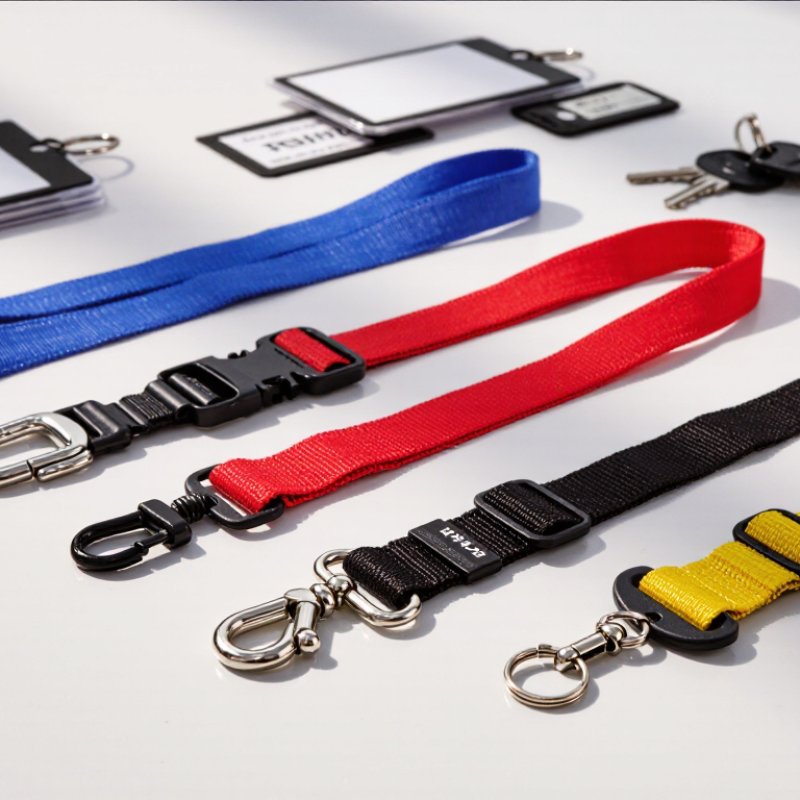
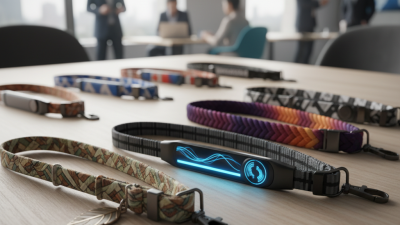
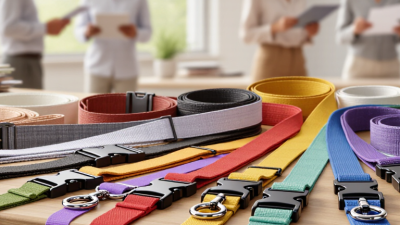
Styles change the feel and visibility. A flat woven lanyard gives text and patterns a textured finish; a smooth, printed style can show finer details. Tubular cords are rounded and lightweight, but offer less room for readable artwork. Keep the design simple. The ASI 2023 Ad Impressions Study reports that 85% of consumers recall the advertiser on a promotional product, though that finding covers promotional products broadly, not lanyards alone. Attachment choice affects everyday convenience: swivel hooks suit badges, split rings fit keys, and clips can hold cards securely. For busy events, a safety breakaway can release under tension. Test it with the actual badge. Detachable buckles add flexibility, but may create another point of wear.

How to Choose Lanyards for Your Brand and Business Needs

Choosing promotional lanyards starts with how people will use them. A conference attendee may need a badge visible all day, while a warehouse team may need a durable clip for daily access cards. Consider the audience, setting, and wear time before choosing a style. Small details matter. A 15-millimeter strap feels lighter; a wider one gives a larger print area.

Match the material and attachment to the job. Polyester is often practical for frequent use, while a softer woven finish can feel more comfortable against the neck. A swivel hook suits many badge holders, but keys may need a different attachment. If lanyards will be worn near machinery, review workplace safety requirements and consider whether a breakaway clasp is appropriate. No single setup fits every team.

Branding should stay legible at a glance. Use strong contrast, repeat a short message, and leave enough space around logos or text. Ask for a physical sample when possible; colors and print scale can look different on a screen. It is easy to overthink the finish. Set a budget, check minimum order quantities, and compare the expected lifespan with the cost. A cheaper strap may be less suitable if it frays after a few events.

Customization Features That Improve Visibility and Function

Promotional lanyards work best when their design helps people notice them and use them comfortably. A company name printed repeatedly along the strap can remain visible when the lanyard twists. High-contrast colors also help text stand out across a busy conference room. Keep the lettering large enough to read at arm’s length; tiny slogans may look crowded rather than polished. A simple logo and one clear message are often more effective than several competing details.

Customization should support the job the lanyard needs to do. A detachable buckle lets staff remove an ID card without taking off the whole strap. A swivel hook can help badges face forward, while a safety breakaway connector may be useful in settings where a lanyard could catch on equipment. Choose the attachment based on the item being carried: a lightweight badge needs less support than a set of keys. Test the clip before ordering in quantity. Small parts can feel different in daily use.

Material and print method affect both appearance and comfort. Woven designs can suit simple text, while printed polyester allows more detailed color patterns. Soft edges matter when people wear a lanyard for an entire shift. There is a trade-off, though: very bold graphics may be harder to read when folded or turned around. Ask for a sample and check the print under indoor lighting. It is easy to overlook that detail. A quick real-world test can reveal whether the colors, length, and hardware actually work together.

How to Assess Quality, Cost, and Supplier Options

A good promotional lanyard should feel comfortable after several hours, not just look attractive in a product photo. Check the weave for loose threads and the print for clear edges. Run a finger along the stitching, then test the clip with a badge attached. Small details matter. A wider strap may sit better on the neck, while a lightweight attachment can reduce tugging. Ask for a sample when timing allows; a digital proof cannot show texture or stiffness.

Compare quotes on equal specifications. Include strap width, material, print method, attachment, setup fees, delivery, and any minimum order. A low unit price may hide extra charges or a longer lead time. Yet the cheapest option is not automatically poor quality. For a one-day event, a simpler strap may be entirely practical. For repeated staff use, stronger stitching and a reliable clasp may justify a higher cost. There is no perfect specification for every budget.

Assess suppliers by how clearly they answer questions and document production details. Request a written proof, estimated dispatch date, and process for handling defects or delays. Check that the quoted sample matches the final materials and hardware. Even careful checks cannot remove every risk; samples may differ slightly from a large production run. Still, comparing two or three suppliers against the same checklist makes trade-offs easier to see.

What Are the Best Promotional Lanyards for Businesses? – How to Assess Quality, Cost, and Supplier Options

Compare common lanyard styles by typical construction, use, and indicative pricing. Prices are approximate USD per piece for an order of around 500 units; actual quotes vary by dimensions, print coverage, attachments, packaging, and production location.

Lanyard Type Typical Material and Finish Quality Factors to Check Indicative Unit Cost Typical Production Time Best Suited For Supplier Questions
Screen-Printed Polyester Woven polyester strap with a simple one- or two-color print. Check print alignment, edge finishing, color consistency, stitching, and whether the print cracks or rubs off during normal use. $0.30–$0.80 About 2–4 weeks after artwork approval Large events, visitor badges, and campaigns with straightforward artwork and tight budgets. Ask whether artwork setup is included, how many print colors are covered, and whether a pre-production sample is available.
Dye-Sublimated Polyester Polyester strap with artwork transferred into the fabric, often allowing full-color designs. Check image sharpness, color matching, print coverage, strap width, and whether both sides are printed. $0.50–$1.30 About 2–4 weeks after artwork approval Detailed graphics, gradients, event branding, and designs that use multiple colors. Confirm whether the quote includes full-color, double-sided printing and request a physical sample for color and feel.
Woven Polyester Design woven into the strap rather than applied as a surface print. Inspect logo legibility, weave density, edge comfort, stitching, and the level of detail the weaving can reproduce. $0.70–$1.80 About 3–5 weeks after artwork approval Repeated-use programs and designs with simple text or logos that benefit from a textured finish. Ask for the maximum supported design detail, color limits, sample approval process, and any setup charges.
Recycled-PET Polyester Strap made partly or wholly from recycled polyester yarn; printing and attachments vary. Verify the recycled-content claim and documentation. Also check strap strength, print quality, and whether the hardware is recyclable or replaceable. $0.60–$1.60 About 3–5 weeks after artwork approval Businesses seeking a promotional item with documented recycled material content. Request evidence for material claims, confirm the percentage of recycled content, and check whether the price includes certification or documentation.
Nylon Smooth, often glossy strap; available with printed or woven decoration. Check surface finish, color consistency, seam strength, attachment security, and whether the material feels comfortable against the neck. $0.70–$1.80 About 2–5 weeks after artwork approval Staff credentials and repeated use where a smooth, polished finish is preferred. Ask which printing methods are available, whether the strap finish affects print durability, and how attachments are tested.
Breakaway-Safety Lanyard Usually polyester or nylon with a safety release designed to separate under force. Check that the release works reliably, reconnects securely, and is positioned appropriately. Confirm that the product is suitable for the intended environment. $0.50–$1.50 About 2–5 weeks after artwork approval Workplaces, schools, and events where a breakaway feature is desired to reduce snagging risk. Ask for release-function details and sample testing. Do not treat a breakaway feature as a substitute for a workplace safety assessment.
Premium Wide or Padded Lanyard Wider strap, soft backing, or upgraded hardware; construction varies by supplier. Assess comfort during extended wear, padding attachment, stitching, hardware finish, and overall weight. $1.20–$3.50 About 3–6 weeks after artwork approval Staff who wear credentials for long shifts, conferences, or premium welcome kits. Request a sample to evaluate comfort and weight. Compare the exact hardware and strap dimensions in each quote.
Indicative estimates only. Compare like-for-like quotations, including setup, attachments, shipping, taxes, packaging, and any sampling fees.